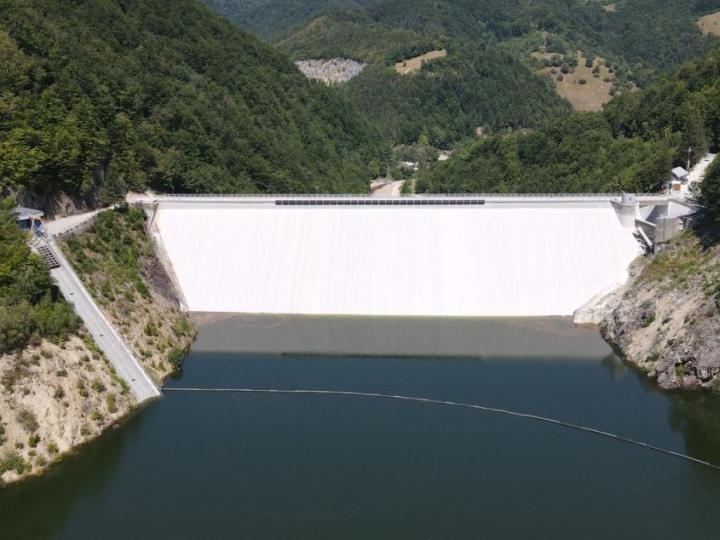
Improving the Safe Operating Conditions of the Leșu Reservoir
Country: Romania
Member Association: ARIC
Company: AQUAPROIECT S.A.
Location: Bihor County
Duration: 2023-2026
The Leșu Reservoir is one of the main hydrotechnical schemes in the Crișuri River Basin. It is located on the Iad River, a left-bank tributary of the Crișul Repede, within an area of high ecological value and a Natura 2000 site. The location meant the rehabilitation works had to address dam safety and operation, as well as environmental protection and the restoration of river connectivity.
Leșu Dam is a rockfill dam with an upstream reinforced-concrete facing. It has a structural height of 60.50 m, a crest length of 181 m and a crest width of 7 m. The upstream facing covers approximately 11,800 m². The reservoir has a live storage volume of 26.0 million m³ and a gross volume of 28.3 million m³ at the normal retention level.
Following technical expert assessments and specialist investigations, the project focused on rehabilitating and modernising the existing scheme. The works covered the waterproofing system, foundation, hydromechanical equipment, monitoring systems and associated infrastructure. AQUAPROIECT S.A. prepared the technical documentation as general designer and provided technical assistance during the construction works.
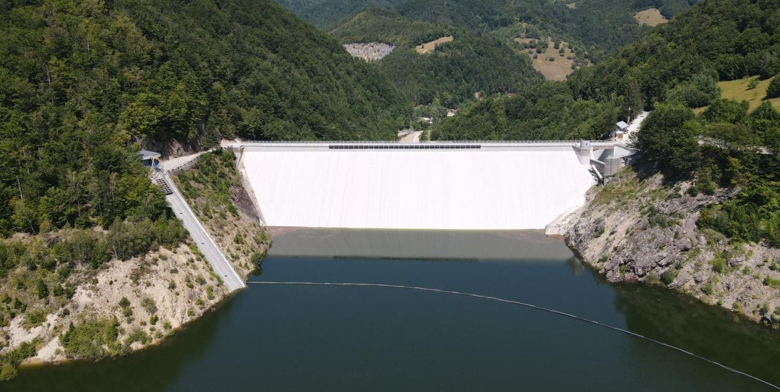
Fig. 1 — Aerial view of the Leșu Dam after rehabilitation [2026, SOCOT S.A]
Main works carried out
- Rehabilitation and waterproofing of the upstream facing, including repair of the concrete slabs, treatment of joints and cracks, and installation of a new sealing system consisting of a PVC geomembrane laid over geotextile. The total area of the rehabilitated facing is approximately 11,800 m². A controlled drainage system was also provided to manage any seepage.
- Grouting and rehabilitation of the foundation sealing and drainage system. The works included completion of the grout curtain, contact and consolidation grouting, and the construction of new drainage works.
- Rehabilitation of the grouting gallery, including repair of concrete elements, treatment of cracks and joints, and sealing works at the contact between the gallery and the abutments.
- Rehabilitation of the hydromechanical equipment of the hydropower plant intake, water intake and bottom outlet, including works on the gates, trash racks, stoplogs and operating mechanisms. At the bottom outlet. The works included the rehabilitation and replacement of hydromechanical equipment as well as interventions on the associated structures.
- Modernisation of the dam behaviour monitoring system (instrumentation) using electronic sensors and transducers, vibrating-wire piezometers, crackmeters, water level transducers, and automatic data acquisition and transmission systems.
- Implementation of an integrated SCADA system for monitoring and automating the scheme. The system provides real-time data transmission, parameter recording, alarm management and supervision of the hydromechanical equipment and associated installations.
- Construction of the FishFlow fish pass: a siphon-type system approximately 900 m long. The fish pass provides a connection between the upstream and downstream sections of the Iad River, allowing fish to migrate in both directions. The system uses the siphon principle and includes a flow-control system with a vacuum pump and safety valve. Its route follows the water-level difference between the downstream and upstream sides and is integrated into the dam's downstream face.
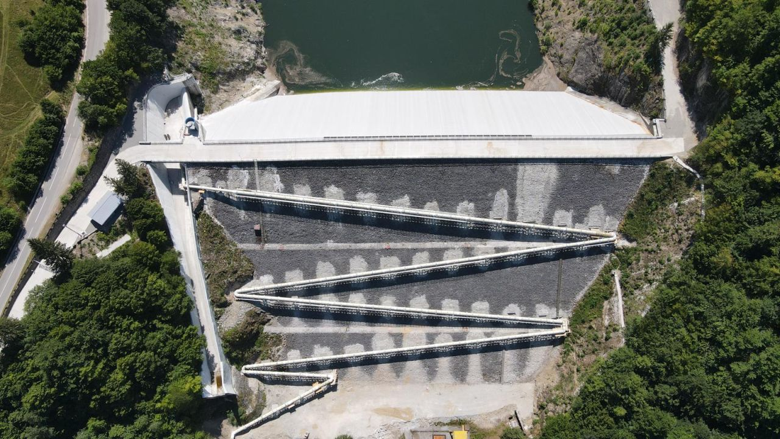
Fig. 2 — Fish ladder [2026, SOCOT S.A]
- Construction of three floating vegetated islands, with an average total surface area of approximately 150 m². The islands were designed as a nature-based solution for improving water quality through natural bioremediation processes and for developing aquatic habitats.
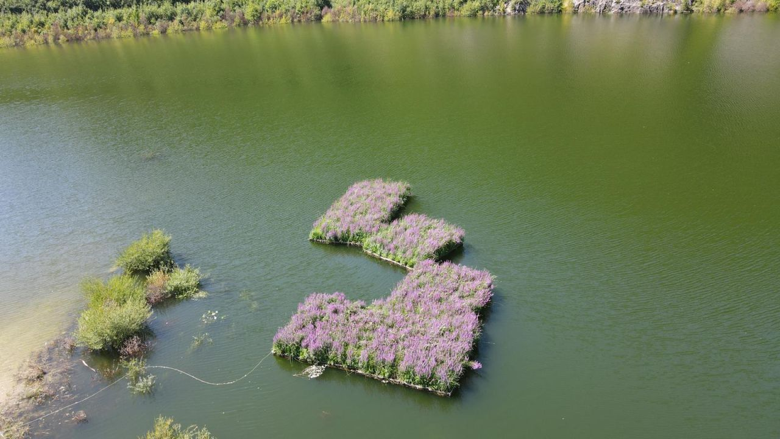
Fig. 3 — floating vegetated islands [2026, SOCOT S.A]
- Construction of a floating debris collection system to reduce the amount of material carried towards the water intakes and other hydrotechnical installations, while also helping to protect the aquatic environment.
- Rehabilitation of the dam's external infrastructure, including the crest road and lighting, platforms and access routes, behaviour-monitoring pillars, and stairways on the downstream face. New pontoons were also constructed to provide access to the water surface.
The rehabilitation of the Leșu scheme combines structural and hydraulic works with the modernisation of monitoring and control systems and measures for the surrounding aquatic environment. The solutions developed by AQUAPROIECT S.A. make use of the existing infrastructure while improving its condition, operation and monitoring. The works also extend the service life of the scheme and bring key safety, monitoring and operational systems in line with current requirements.